Specific Adaptation to Imposed Demands
- Nov 7, 2017
- 3 min read
Specific Adaptation to Imposed Demands (SAID) Stages
Stress (stimulus)
Exercise / Physical Activity
Adaptation (response)
Specific responsive biological adjustment to stress
Muscle, bone, heart, lung, vasculature, tendons,ligaments, joint cartilage, etc.
If stress is too great, or sufficient recovery time not allowed
adaptation may be inhibited
decrement in capacity of physiological systems
See overtraining
Accommodation
Adaptation response will begin to slow if the exact same stimulus is continued for a prolonged period of time.
Exhaustion
Adaptation is complete after limited time span
Continued stimulus no longer elicits adaptation
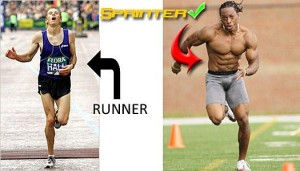
Training Specificity

Training effects are specific to the muscle groups used during training and the type of training program implemented (Fox 1975).
Training specifically for the movement pattern, speed, joint position, speed, and type of contraction produces improvement, specifically in those movement parameters (Kreighbaum 1996).
Specific sport or activity yields greatest improvements
Supplement activity or sports training with resistance, cardiovascular, plyometrics, flexibility exercises
Utilize progression and periodization techniques
Also see Adaptation Criteria.
Adaptation is specific to :
Mode
Type of training
Components of fitness
Metabolic Pathway
Also see Cross Training
Mechanics
Motor Pattern
Mechanical forces on joints, and bones utilized
Muscles involved
Tension curve
Range of motion
Intensity
Effort
Resistance
Speed of contraction
power training examples
Metabolic pathways utilized
Duration
Time exercising
Recovery between bouts or work intervals
Number of reps
Number of exercises and sets
Frequency
Recovery
Fox E, McKenzie D, Cohen K. (1975). Specificity of training: metabolic and circulatory responses. Med Sci Sports, 7(1):83.
Kreighbaum, E., Barthels KM (1996). Biomechanics; A Qualitative Approach for Studying Human Movement, Allyn & Bacon, 4.
Identical-elements Theory
Transfer of learning between various skills and exercise routines can occur if the main elements underlying different skills or situations surrounding performance are identical and similar in nature.
Eg: Gymnastic training aimed at practicing complex exercise maneuvers complement (positively transfer) to the springboard diving.
As the degree of similarity between stimuli and responses decline, conflicting consequences may be experienced.
Transition from gymnastic to diving may not likely transfer because of the dissimilarity between diving and gymnastic somersaulting techniques.
Slobounov SM (2008). Injuries in Athletics, Causes and Consequences, Springer, 25-43

Range of Motion
Perform every weight training exercise through a full range of motion
Recommended by leading authorities
American College of Sports Medicine 1995
Fleck & Falkel 1986
Develops strength throughout full range of motion
Maintains flexibility (Morton 2011, Souza 2013)
necessary for ideal mechanics, function, and joint integrity
Joint adapts to full extension and flexion
Less susceptible to injury at extremes after adaptation
Unless range of motion will never be used
Consider unintentional or accidental range of motion in real world situations
Conditions stabilizing muscles
See examples
Supraspinatus Weakness
Vastus Medialis Weakness.
Full range of motion varies from person to person.
Also see Common Orthopedic Inflexibilities and Over Generalizations.
For elderly adults, perform the maximum range of motion that does not elicit pain or discomfort (ACSM 1995)
American College of Sports Medicine (1995). Principles of Exercise Prescription, William & Wilkins, 5.
Morton SK, Whitehead JR, Brinkert RH, Caine DJ (2011). Resistance training vs. static stretching: effects on flexibility and strength. J Strength Cond Res. 25(12):3391-8.
Slobounov SM (2008). Injuries in Athletics, Causes and Consequences, Springer, 25-43.
Souza AC, Bentes CM, de Salles BF, Reis VM, Alves JV, Miranda H, Novaes Jda S (2013). Influence of inter-set stretching on strength, flexibility and hormonal adaptations. J Hum Kinet. 36:127-35.
Sports Conditioning
Consider all activities when selecting exercises for a strength and conditioning program
jumping, leaping, squatting, lifting, pushing, climbing, running, cutting, blocking, etc.
Unilateral and transverse movements
Other sports-specific training or motor skills
Utilize Periodization techniques for progressive adaptation
general to sports-specific training
Also see Example Power Training Progressions
Also see
Squats and Sports Performance
Resistance Training for the Reduction of Sports Injury
...it is a common practice in collegiate athletics that divers and swimmers utilize similar heavy resistance workouts for upper body, particularly during preparation period. This is inconsistent, at least, with the principle of specificity. Coaches should be aware that "what is honey for a swimmer could be poison for a diver".
Slovounov SM 2008


Comments